
"disease progression"
300 article(s) found

El Salvador Coffee producing area Sonsonate Province IzaIco area Santa Ana Volcano area
[organic planting]: the civil war in the 1980s made many coffee farmers in war zones unwilling to spend agricultural fertilizer on coffee plantations, resulting in the fact of "organic planting". After the war, coffee plantations with organic cultivation were set up with the assistance of the government, and many of them obtained the Eco-ok certification of the Rainforest Alliance (Rain forest-Alliance). There is currently 2000 hectares of coffee.
Coffee Bean Species Arabica and Robusta Coffee Bean Relationship Wild Coffee Tree Distribution and Characteristics
A lot of people compare Arabica to Robusta beans and think they're in a tie. Robusta is actually older than Arabica, which is pollinated by a cross between Robusta and Coffea canephora. Let Xiaobian popularize the following little knowledge for everyone today! Of all the catalogued species in the genus Coffea, only three have quotient.

Coffee beans from El Salvador
Area: 210.41 million square kilometers Climate: tropical climate, temperature varies slightly with altitude; May to November rainfall is greater Capital: San Salvador (San Salvador) language: Spanish; other: Indian dialect currency: Colon [country profile]: El Salvador is the largest in Central America.

If you drink more coffee, you will get the basic knowledge of fine coffee for pancreatic cancer.
Pancreatic cancer quadrupled 20 years ago, doctors wanted to do a pancreatic cancer surgery, it would take a long time, now, almost every day. On the sidelines of the meeting, Vice President Liang Tingbo said that last year, the second Hospital of Zhejiang Medical College performed more than 200 operations for pancreatic cancer, indicating that the number of patients with pancreatic cancer is now on the rise. In the past decade, the number of patients in China has increased by more than 15%, even by 100% compared with the previous two years.

[introduction of producing areas] Coffee producing areas in Africa-Kenya and Malawi
Kenya Kenya population: 44,354,000 people produced in 2013 (60kg / bag): 850,000 bags of coffee taste: Kenyan coffee is known for its distinct and complex berry and fruit flavors, with sweet flavors and dense acidity. Central Kenya produces the most coffee and is of the best quality. Of course, Kisii, TransNzoia, K in western Kenya

Introduction of Colombian Coffee producing area, one of the most famous quality producing areas
As one of the most famous high-quality producing areas in Colombia, the name Huilan has long been familiar, but coffee growers here are not reconciled to the past, and are constantly exploring and growing better and more distinctive micro-batch coffee every year. In the city of Acevedo (Acevedo) in Huilan Province, the producing area of the manor owner Mercedes Nalvaes (Mercedes Narvaez)
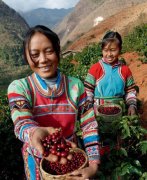
Coffee Bean Workshop in Baoshan, Yunnan
In Baoshan City, Yunnan Province, people divide the climate change in the year by the rainy season and the dry season. It is a quiet and sunny afternoon. Kapok trees sort out their branches and leaves in the warm spring wind. It will soon fill the whole courtyard with the fragrance of marshmallow. Tian Daihe decided whether or not to go to the kindergarten in Lujiang Town according to his own mood.

El Salvador Coffee Bean Flavor taste Manor production area introduces El Salvador boutique coffee
The civil war in the 1980s made many coffee farmers in war zones unwilling to spend agricultural fertilizer on coffee plantations, resulting in the fact of "organic planting". After the war, coffee plantations with organic cultivation were set up with the assistance of the government, and many of them obtained the Eco-ok certification of the Rainforest Alliance (Rain forest-Alliance). At present, 2000 hectares of coffee plantations have been organically certified.

Flavor description of Salvadoran coffee beans introduction to the manor of taste by variety treatment
El Salvador coffee beans flavor description grinding scale variety treatment taste manor introduction and government-controlled marketing and export is even more disadvantageous to the whole industry! In the first year of the establishment of Incafe, coffee production fell from 175000 tons in 1979 to 141000 tons in 1986, of course, as a direct result of producers' reluctance to invest again; Incafe not only charged 50% of the export price of raw beans exported.

Introduction to boutique coffee with rich and unique aroma and taste characteristics of Bolivian snow vein manor
In 1932, the Chaco War broke out between Bolivia and Paraguay for oil resources in the North Chaco region. Bolivia was defeated and lost a large area of territory. The people's armed uprising broke out in April 1952, and Paisdensolo, leader of the nationalist revolutionary movement, became president. Since then, there have been frequent military coups and long-term political instability. Modern assets with South American characteristics were restored in October 1983

El Salvador Coffee Bean Flavor Description Grind Scale Production Area Variety Treatment Taste Introduction
El Salvador coffee beans flavor description grinding scale production area variety processing method taste introduction El Salvador coffee and Mexico, Guatemala tied for Asa, Mexico set around the country of production, and is competing with other countries for the top one or two in Central America. Highland origin, for the size of large coffee beans, fragrant taste mild. Salva, like Guatemala and Costa Rica,

Can regular coffee prevent diabetes?
It is reported that, as a panacea to start our day in the morning, many studies have shown that it may play a role in the fight against type 2 diabetes. However, at present, no one knows its mechanism. Now, researchers at the University of California, Los Angeles (UCLA) have discovered a possible molecular mechanism for the protective effects of coffee. A protein called sex hormone binding globulin (SHBG)

Introduction to grinding scale of Colombian small coffee bean flavor description method
Colombian coffee beans small grains of coffee is suitable to grow in the mountains of 800 to 1800 meters above sea level. If the altitude is too high, it will taste sour, and if it is too low, it will taste bitter. Small grains of coffee are mostly planted in dry and hot valleys about 1100 meters above sea level, so they are moderately sour, rich and mellow. There is a unique environment suitable for the growth of small seed coffee in many areas of Yunnan, and the quality of small seed coffee is excellent. Species

General situation of Coffee Bean Workshop in Baoshan, Yunnan Province
In Baoshan City, Yunnan Province, people divide the climate change in the year by the rainy season and the dry season. It is a quiet and sunny afternoon. Kapok trees sort out their branches and leaves in the warm spring wind. It will soon fill the whole courtyard with the fragrance of marshmallow. Tian Daihe decided whether or not to go to the kindergarten in Lujiang Town according to his own mood.

Introduction to the regional treatment method for the flavor description of Salvadoran coffee beans
In the 19th century, Salvadoran coffee was an important cash crop, and the government legislated to collect taxes and encourage planting and export. although coffee farmers in the country could not get technical or financial assistance, they were excellent among many coffee-producing countries in terms of the growth of production per hectare. The production of coffee

Tropical climate, introduction of Santa Ana Volcano region with different elevations of El Salvador coffee-producing countries
The civil war in the 1980s made many coffee farmers in war zones unwilling to spend agricultural fertilizer on coffee plantations, resulting in the fact of "organic planting". After the war, coffee plantations with organic cultivation were set up with the assistance of the government, and many of them obtained the Eco-ok certification of the Rainforest Alliance (Rain forest-Alliance). At present, 2000 hectares of coffee plantations have been organically certified.

The counterattack of Robusta Coffee beans Robsta will replace Arabica and enter the boutique coffee world.
Professional coffee knowledge exchange more coffee bean information please follow the coffee workshop (Wechat official account cafe_style) Manning's Robsta blood, Arabica beans or Katim or Katim? As a very important variety in the coffee world, Robusta plays an important role in the business world. Although Q-Grader is already familiar in the coffee circle, however

Introduction to Mercedes Manor with the flavor and taste characteristics of Salvadoran coffee
The civil war in 1980 caused government forces and guerrillas to deal a blow to the coffee industry, as well as natural disasters, as well as the collapse in international raw bean prices between 1986 and 1987, all of which adversely affected the coffee industry. in fact, 80 years ago, the foreign exchange earned by coffee also assisted the country's clothing industry and contributed to the Ministry of Light Industry. And the marketing and export controlled by the government are even more disadvantageous to the whole industry.

The Development Story of Yunnan Coffee introduction to which brand and brewing method of Yunnan coffee
Professional coffee knowledge exchange more coffee bean information please follow the coffee workshop (Wechat official account cafe_style) the development of coffee in Yunnan ● in the history of the introduction of coffee into Yunnan has a history of more than a hundred years, at that time through three ways to enter Yunnan, respectively, introduced by foreign missionaries

Kenya AA boutique manor coffee beans Kangguqi Kangocho Farm Gikanda FCS Cooperative
Professional coffee knowledge exchange more coffee bean information please follow the coffee workshop (Wechat official account cafe_style) Kenya AA boutique manor coffee beans Kangguqi Kangocho farm Gikanda FCS cooperative flavor and taste characteristics? Kenya is a model country for producing fine coffee beans. Coffee was introduced from Britain in 1900, and only traditional Arabica trees were planted until 1900.